Bioethanol, which is a type of renewable fuel that can be used as an alternative to gasoline, has a significant impact on the world’s energy and economic sectors. With the push for carbon neutrality and reduced dependence on fossil fuels, the bioethanol industry has become a pivotal player. Countries worldwide are recalibrating their energy portfolios, and businesses engaged in 1G bioethanol production find themselves strategically positioned at the intersection of environmental responsibility and economic opportunity. This post gives an insight into the current and future potential of Bioethanol in India. The bioethanol market in India is rapidly evolving, driven by the government’s emphasis on renewable energy and reduced dependence on fossil fuels.Investment in India’s bioethanol production is increasing, with the industry showcasing significant potential for profits and returns.
India currently holds an installed capacity of approximately 6.3 billion liters per annum (BLPA). However, current utilization stands at only 3.5 BLPA, indicating a massive untapped infrastructure that is ready for scaling to meet national blending mandates.
| Category | Company Name | Operational Role & Technical Scope |
|---|---|---|
| Producers | Balrampur Chini Mills Ltd. | Integrated sugar & bioethanol production; operates multiple high-capacity distilleries. |
| DCM Shriram Industries Ltd. | Operates large-scale sugar mills and bioethanol production units. | |
| Praj Industries Ltd. | Global technology solution provider; offers end-to-end 1G and 2G ethanol technology development. | |
| Indian Glycols Limited (IGL) | Specializes in bio-based chemicals and advanced bioethanol applications. | |
| Triveni Engineering & Industries Ltd. | Leading sugar producer with substantial technical capacity for ethanol distillation. | |
| Raw Material Suppliers | Sugar Mills Nationwide | Primary suppliers of Sugarcane Molasses (e.g., Upper Ganges, Mawana Sugars). |
| Grain Merchants & Traders | Supplying starchy feedstocks like maize and broken rice (e.g., Punjab Agri Products). | |
| Ag-Residue Aggregators | Focus on cellulosic biomass (e.g., Ecofibre India, Carbon Masters India). | |
| NAFED | Facilitates state-managed raw material procurement and logistics. | |
| Manufacturers (Equipment) | Praj Industries Ltd. | Fermentation, distillation, and dehydration systems; end-to-end plant equipment. |
| Alfa Laval India Pvt. Ltd. | High-efficiency process equipment, heat exchangers, and separators. | |
| Larsen & Toubro (L&T) Ltd. | Heavy engineering and EPC expertise for large-scale bioethanol plant construction. | |
| Thermax Ltd. | Specialized boilers, heat exchangers, and thermal process equipment. | |
| Bhadra Engineering Works Ltd. | Sugar and distillery machinery with a focus on bioethanol production lines. | |
| Technology Solution Providers | Praj Industries Ltd. | Proprietary in-house technologies and end-to-end project execution. |
| Novozymes India Pvt. Ltd. | Advanced enzymes for starch hydrolysis and high-yield fermentation. | |
| DuPont India Pvt. Ltd. | Advanced yeast strains and specialized process optimization solutions. | |
| Enzyme Industries Ltd. (EIL) | Industrial-grade enzymes specifically for bioethanol manufacturing. | |
| IIT Delhi (BTG) | Bioprocess Technology Group focusing on R&D for advanced production tech. |
The production of bioethanol involves a multi-stage biochemical process aimed at converting raw materials into a sustainable fuel source. Each phase plays a crucial role in ensuring the quality and efficiency of the final product:
Utilizing yeast strains (predominantly Saccharomyces cerevisiae), this stage orchestrates the conversion of sugars into ethanol and $CO_2$. Stringent control of temperature (28–32°C) and pH (4.5–5.0) is imperative for yield maximization.
Post-fermentation, Fractional Distillation separates ethanol from the broth to reach 95% purity. To achieve fuel-grade 99.5% purity, Azeotropic Distillation supplemented by molecular sieve drying agents is utilized.
EVS (ENERGIA VERDE SOLUTIONS)
Call: +91 95021 07642
Email: sp@energyvss.com | Evs@energyvss.com
The most critical stage for 2G production, aimed at making the complex biomass structure accessible to enzymes through various methods:
Pretreated biomass undergoes enzymatic hydrolysis where cellulase and hemicellulase convert polymers into glucose and xylose. This is typically conducted under controlled conditions: Temperature 45–50°C and pH 4.8–5.0.
Hydrolyzed sugars are fermented into ethanol using specialized microorganisms. 2G processes require strains (yeast like S. cerevisiae or engineered bacteria) capable of fermenting both hexoses (6-carbon) and pentoses (5-carbon) for maximum efficiency. Optimal conditions: 30–37°C and pH 4.5–5.5.
Similar to 1G ethanol production, the fermented broth undergoes distillation to purify ethanol to the desired concentration.
2G ethanol production generates several valuable co-products that enhance the overall sustainability of the process.
Sugarcane remains a dominant crop in India, with approximately 5 million hectares dedicated to its cultivation. Traditionally, sugar and its byproduct, molasses, serve as the primary feedstocks due to their high fermentable sugar content.
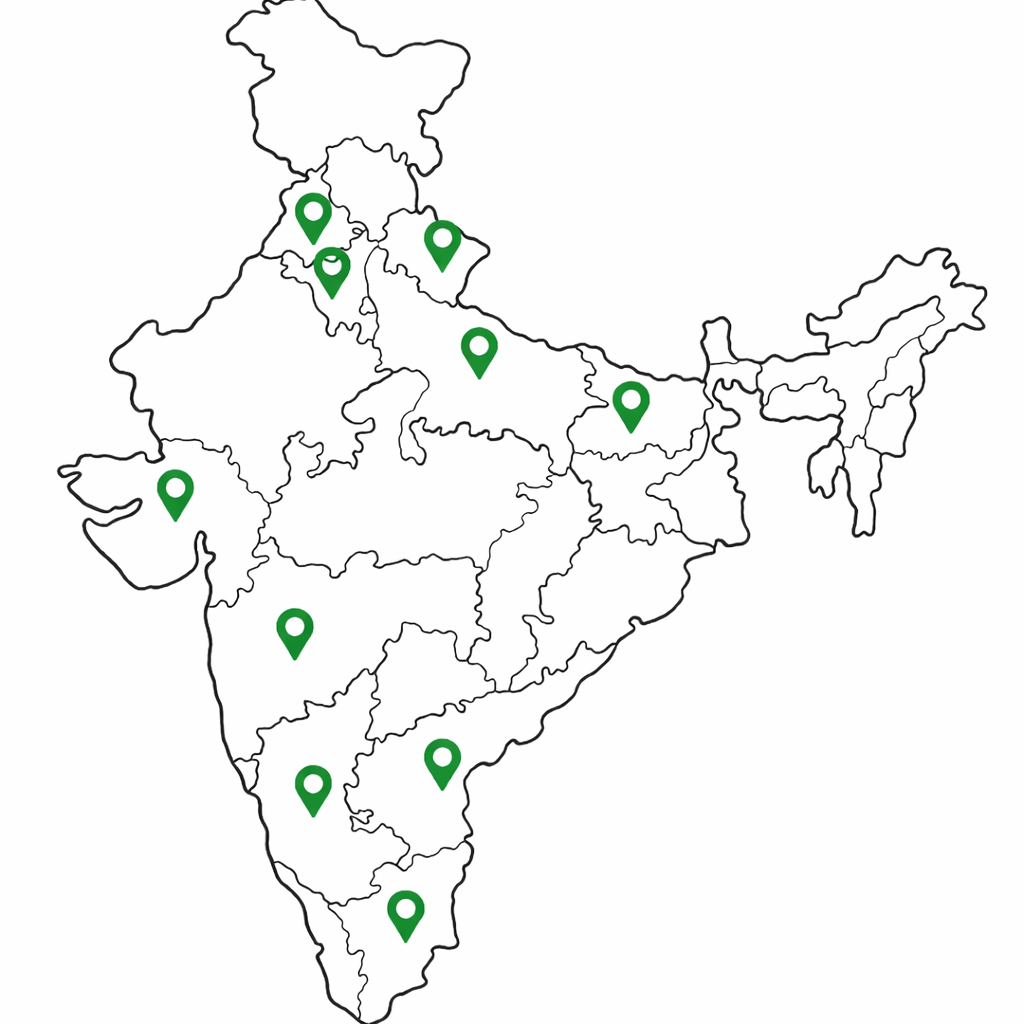
| Rank | State | Sugarcane Production (MTY) | Molasses Availability (MTY) |
|---|---|---|---|
| 1 | Uttar Pradesh | 432.00 | 17.28 |
| 2 | Maharashtra | 368.00 | 14.72 |
| 3 | Karnataka | 238.00 | 9.52 |
| 4 | Tamil Nadu | 189.00 | 7.56 |
| 5 | Bihar | 175.00 | 7.00 |
| 6 | Punjab | 107.00 | 4.28 |
| 7 | Gujarat | 104.00 | 4.16 |
| 8 | Haryana | 98.00 | 3.92 |
| 9 | Andhra Pradesh | 89.00 | 3.56 |
| 10 | Telangana | 85.00 | 3.40 |
| State | Primary Feedstock | Emerging & Potential Feedstocks | Infrastructure Status | Government Initiatives |
|---|---|---|---|---|
| Uttar Pradesh | Sugarcane molasses | Rice straw, wheat straw | Developing | Ethanol blending program; financial assistance for bioethanol projects. |
| Maharashtra | Sugarcane molasses | Sorghum, rice straw, bagasse | Relatively developed | State biofuel policy; focus on cellulosic ethanol production. |
| Karnataka | Sugarcane molasses | Rice straw, bagasse, cassava | Developing | K-Biofuel Development Corporation promotes R&D. |
| Tamil Nadu | Sugarcane molasses | Rice straw, bagasse | Moderately developed | Bioethanol blending mandate; subsidies for setting up plants. |
| Bihar | Sugarcane molasses, broken rice | Maize, rice straw | Limited development | Promoting maize cultivation; biofuel policy under development. |
| Punjab | Sugarcane molasses, damaged food grains | Rice straw, wheat straw | Moderately developed | Punjab Bioethanol Policy promotes multi-feedstock plants. |
| Haryana | Sugarcane molasses, damaged food grains | Wheat straw, rice straw | Moderately developed | Biofuel Development Policy focuses on feedstock diversification. |
| Andhra Pradesh | Sugarcane molasses, broken rice | Maize, rice straw, sorghum | Developing | State Biofuel Policy promotes setting up 2G bioethanol plants. |
| Telangana | Sugarcane molasses, broken rice | Maize, rice straw, sorghum | Limited development | Mission for Acceleration of Development of Biofuels (MAD-Bio). |
| Gujarat | Sugarcane molasses | Cotton stalks, other ag-residues | Moderately developed | Gujarat Biofuel Policy promotes research in cellulosic ethanol. |
| Madhya Pradesh | Sugarcane molasses (limited) | Rice straw, wheat straw, dedicated energy crops | Limited development | Bioethanol blending mandate; focus on promoting production from non-food feedstocks. |
| Odisha | Sugarcane molasses (limited) | Rice straw, dedicated energy crops | Limited development | Odisha Biofuel Development Policy encourages setting up bioethanol plants. |
| Rajasthan | Sugarcane molasses (limited) | Sorghum, wheat straw | Limited development | Rajasthan Biofuel Policy promotes research and development in biofuels. |
| Chhattisgarh | Sugarcane molasses (limited) | Rice straw, dedicated energy crops | Limited development | Chhattisgarh Biofuel Policy focuses on promoting sustainable biofuel production. |
| West Bengal | Sugarcane molasses (limited) | Rice straw, jute stalks | Limited development | West Bengal Biofuel Development Policy promotes setting up biorefineries. |
| Category | Feedstock Examples | Technical Advantages | Disadvantages & Constraints | Current Status in India |
|---|---|---|---|---|
| 1. First-Generation (1G) Feedstocks | Sugarcane Molasses | Readily available from existing sugar industry infrastructure; established conversion technology. | Competes with sugar production for land; high water footprint. | Dominant feedstock used extensively across India. |
| Sugarcane Juice (Limited) | High sugar content; potentially high ethanol yield per ton. | Competes directly with sugar production for food and industrial uses. | Limited use; primarily restricted to surplus sugarcane regions. | |
| Sugar Beet (Limited) | High sugar content; excellent cold tolerance. | Requires specific climate and soil; limited cultivation area. | Limited use; primarily in suitable northern states. | |
| Damaged Food Grains (Rice, Corn, Wheat) | Readily available during surplus or spoilage periods. | Unreliable supply; potential competition with food security needs. | Limited/sporadic use due to food security concerns. | |
| Sorghum | Drought-resistant; grows in diverse and marginal soil conditions. | Lower ethanol yield compared to sugarcane. | Gaining attention as an alternative; research and pilot projects ongoing. | |
| 2. Second-Generation (Cellulosic) Feedstocks | Agricultural Residues (Rice/Wheat straw, Corn stover, Bagasse) | Abundant and underutilized; contributes to a circular economy and significant waste reduction. | Requires advanced enzymatic conversion; currently more expensive than 1G; bulky and difficult to transport. | Increasing focus with multiple research and pilot projects; government incentives for utilization. |
| Forestry Residues (Wood chips, Sawdust) | Potentially abundant source, especially in regions with active forestry or woodworking. | Requires careful management to avoid unsustainability; complex logistics and environmental concerns. | Limited current use; potential for expansion with responsible sourcing. | |
| Energy Crops (Bamboo, Perennial grasses) | High yields per hectare; potential for significant carbon sequestration. | Requires dedicated land; potential competition with food crops or land-use changes. | Emerging option with long-term potential under responsible planning. | |
| 3. Other Potential Feedstocks | Algal Biomass | High potential for efficient biomass production; can be cultivated on non-arable land. | Requires significant R&D to improve cost-effectiveness and scalability; not yet commercially viable. | Early research stage with significant technical challenges to overcome. |
| Industrial Wastes (Organic waste streams) | Contributes to urban waste management and resource recovery. | Requires efficient collection and specialized pre-processing of diverse streams. | Limited use; pilot projects currently exploring potential. |
India possesses a vast and diverse range of residues that serve as high-potential technical feedstocks:
| TRL Level | Development Stage | Strategic Technical Description | Examples in India |
|---|---|---|---|
| TRL 8-9 | Mature Technologies | Commercially available and widely used for large-scale bioethanol production. | 1st generation bioethanol from sugarcane molasses. |
| TRL 7 | Advanced Demonstration | Demonstrated in pilot or commercial-scale operations; nearing wider industrial adoption. | 2nd generation bioethanol from lignocellulosic biomass (cellulose, hemicellulose). |
| TRL 5-6 | Validation Stage | Processes validated in lab or pilot-scale; progressing towards full-scale demonstration. | Enzymatic hydrolysis pre-treatment; Consolidated Bioprocessing (CBP). |
| TRL 3-4 | Early Development | Potential demonstrated in laboratory settings; requiring significant technical refinement. | 3rd generation bioethanol from algae; microbial fermentation using non-conventional feedstocks. |
| TRL 1-2 | Fundamental Research | Exploratory research focused on new feedstocks and theoretical conversion pathways. | Direct conversion of lignocellulose; bioethanol production using engineered microorganisms. |
| Category | Application | Strategic Technical Description |
|---|---|---|
| Transportation | Gasoline Blending (E5–E20) | Primary application replacing a portion of gasoline to reduce harmful emissions and fossil fuel dependency. |
| E85 and E100 (Flex-Fuel) | High-concentration blends used in specially designed vehicles for carbon-neutral burning. | |
| Industrial Applications | Chemical Feedstock | Renewable alternative to petroleum for producing green ethylene used in plastics and polyesters. |
| Solvents & Cleaning Agents | Leveraging bio-solvent properties for degreasers, disinfectants, and industrial cleaning. | |
| Paints and Coatings | Sustainable solvent option for eco-friendly product formulations. | |
| Energy Generation | Bioethanol Fuel Cells | Direct utilization in fuel cells for high-efficiency electricity generation (under development). |
| Combined Heat & Power (CHP) | Co-generation of electricity and heat to maximize industrial energy efficiency. | |
| Other Applications | Cooking Fuel | Clean, efficient, and smokeless cooking fuel option, particularly for rural health. |
| Biogas Production | Secondary feedstock for anaerobic digestion to produce biogas for power or vehicle fuel. |
| Potential Future Uses | Application | Technical Growth Outlook |
|---|---|---|
| Aviation Fuel | Bio-Blends in SAF | Ongoing R&D into Sustainable Aviation Fuel (SAF) blends to decarbonize air travel. |
| Marine Biofuels | Marine Fuel Blends | Investigation into maritime emission reduction; addressing fuel stability and engine compatibility. |
| Hydrogen Production | Bio-hydrogen Feedstock | Utilizing bioethanol in Steam Reforming or fermentation to produce clean hydrogen for fuel cells. |
| Category | Niche Application | Strategic Technical Description |
|---|---|---|
| Pharmaceutical Industry | Solvent and Excipient | Utilized in various extraction and purification processes; functions as a critical excipient in liquid drug formulations. |
| Personal Care Products | Solvent and Ingredient | Key base for cosmetics, fragrances, and aerosol formulations; acts as an effective delivery agent for active ingredients. |
| Biodegradable Plastics | Bio-based PEF Feedstock | Potential feedstock for producing Polyethylene Furanoate (PEF), a high-performance biodegradable alternative for sustainable packaging. |
| Sector | Primary Benefits |
|---|---|
| Transportation | Reduced reliance on fossil fuels, lower GHG emissions, and significant improvement in air quality. |
| Agriculture | Creation of new crop markets and increased demand for advanced agricultural machinery and services. |
| Chemical & Manufacturing | Enabling production of bio-based consumer products and driving technological innovation in manufacturing. |
| Environmental | Mitigation of air/water pollution and active carbon sequestration (depending on specific feedstock types). |
| Sector | Long-term Strategic Impact |
|---|---|
| Rural Development | Employment generation through localized cultivation, processing, and transportation infrastructure. |
| Energy Security | Diversification of energy sources to reduce geopolitical uncertainty and fuel dependency. |
| Waste Management | Enables the valorization of organic waste and ag-residues through circular economy principles. |
| Research & Development | Drives localized investment in high-efficiency conversion processes and feedstock innovation. |
While bioethanol offers a path to energy security, several systemic barriers hinder its widespread adoption. Balancing the "food vs. fuel" trade-off while ensuring a consistent supply of feedstock remains a core strategic challenge for the industry.
| Business Model | Strategic Description | Benefits (Farmers) | Benefits (Companies) | Primary Risks |
|---|---|---|---|---|
| Contract Farming | Companies provide seeds, technical assistance, and guaranteed buyback for specific cultivated crops. | Secure market access, guaranteed income, and expert technical support. | Reliable feedstock supply with controlled quality and standards. | Farmers: Dependence on single buyer. Industries: Contract enforcement and crop failure impact. |
| Partnerships with Biofuel Companies | Farmers/cooperatives collaborate with biofuel entities to share resources, knowledge, and risks. | Shared risks and benefits; significant knowledge and technology transfer. | Access to reliable feedstock through collaboration with experienced growers. | Farmers: Unequal bargaining power. Industries: Profit sharing and potential partner disputes. |
| Integrated Biorefinery | Large companies establish their own facilities encompassing the entire value chain (Feedstock to Fuel). | N/A (Typically corporate-owned or large-scale land management). | Complete process control, potentially higher profit margins, and value-chain synergy. | High upfront CAPEX; requires diverse technical expertise and heavy environmental oversight. |
| Initiative | Strategic Description | Benefits/Goals | Industrial Examples |
|---|---|---|---|
| Capacity Expansion | Establishing new dedicated bioethanol plants and expanding existing distillation capacities. | Increase production volumes to meet aggressive national blending mandates. | Balrampur Chini Mills’ massive expansion plans. |
| Diversification of Feedstocks | Moving beyond sugarcane molasses toward alternative sources like maize, sorghum, and damaged grains. | Reduce dependence on sugarcane; address sustainability and food security concerns. | HPCL (Hindustan Petroleum) exploring maize and sorghum for production. |
| Strategic Collaborations | Forming JVs and partnering with global technology providers and research institutions. | Pooling resources and expertise to access advanced 2G technologies. | Praj Industries collaborating with international firms for advanced processes. |
| Technology Development | Investing in R&D for 2G bioethanol and adopting high-efficiency conversion technologies. | Improve conversion rates and reduce production costs through pilot/demo plants. | Establishment of 2G bioethanol demonstration plants. |
| Skill Development | Providing training programs for the specialized workforce engaged in the bioethanol sector. | Ensure availability of skilled technical personnel for the growing industry. | Industry collaborations with vocational training institutions. |
The Indian bioethanol market is poised for substantial growth, driven by the government's aggressive ethanol blending mandate and the rising demand for sustainable energy. With an estimated market size of USD 5.2 billion by 2027 and a projected capacity expansion to 15 billion liters by 2030, the industry is a cornerstone of India's energy portfolio.
The adoption of diverse feedstocks—including molasses, starch-based grains, and emerging lignocellulosic biomass—ensures a robust and resilient supply chain. Future growth will hinge on continued government support and technological advancements in second-generation (2G) bioethanol production. Companies like Praj Industries and Balrampur Chini Mills Ltd. are leading this transition, leveraging their technical expertise to develop innovative solutions. Bioethanol is no longer just an alternative; it is a critical driver for India’s renewable energy ambitions and sustainable future.